

素材
モチーフ部分:シルク、牛革
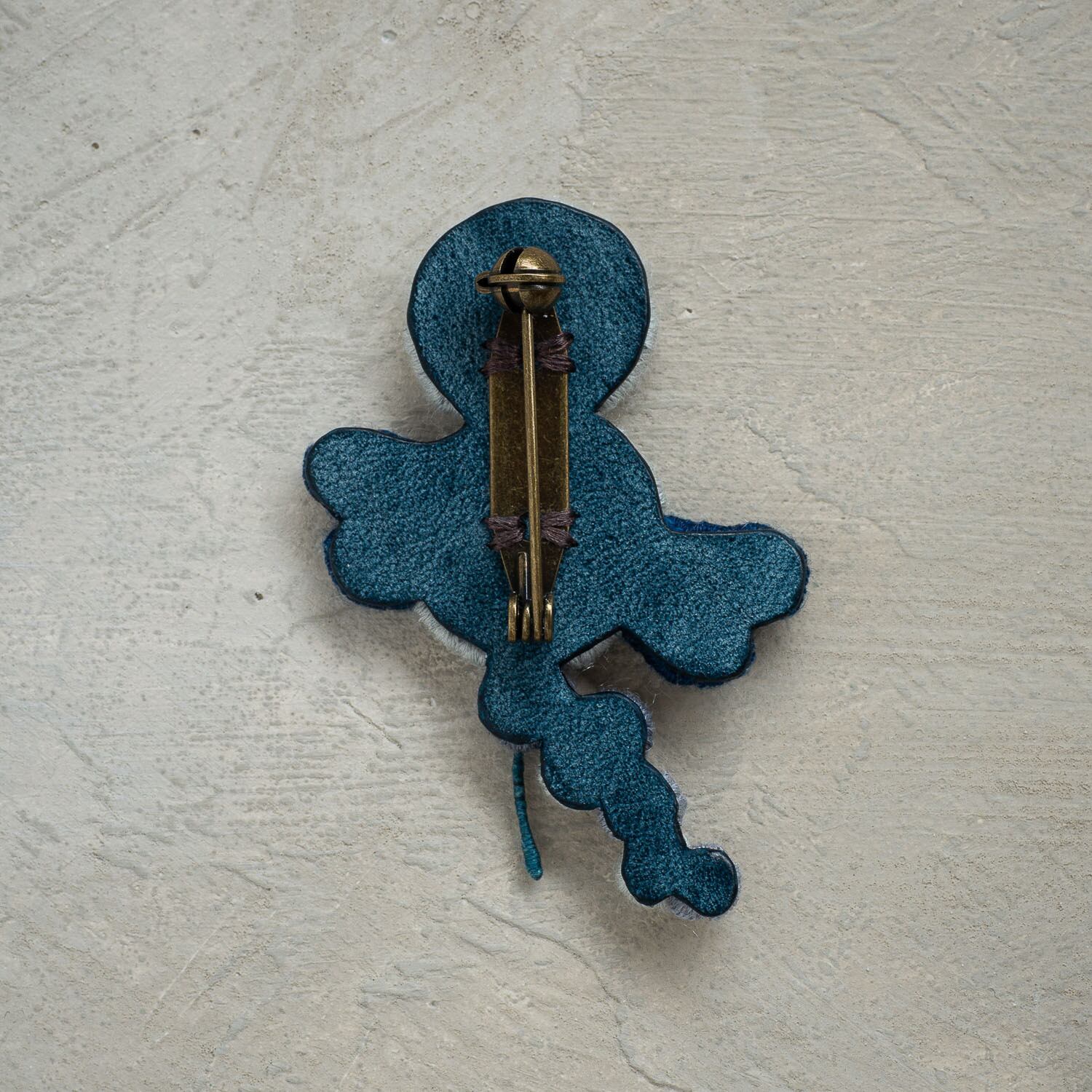
ブローチ金具:真鍮(アンティークゴールド仕上げ)
サイズ
モチーフ部分:縦53mm, 幅35mm
ブローチ金具:28mm
─
1. ご使用にあたって
刺繍
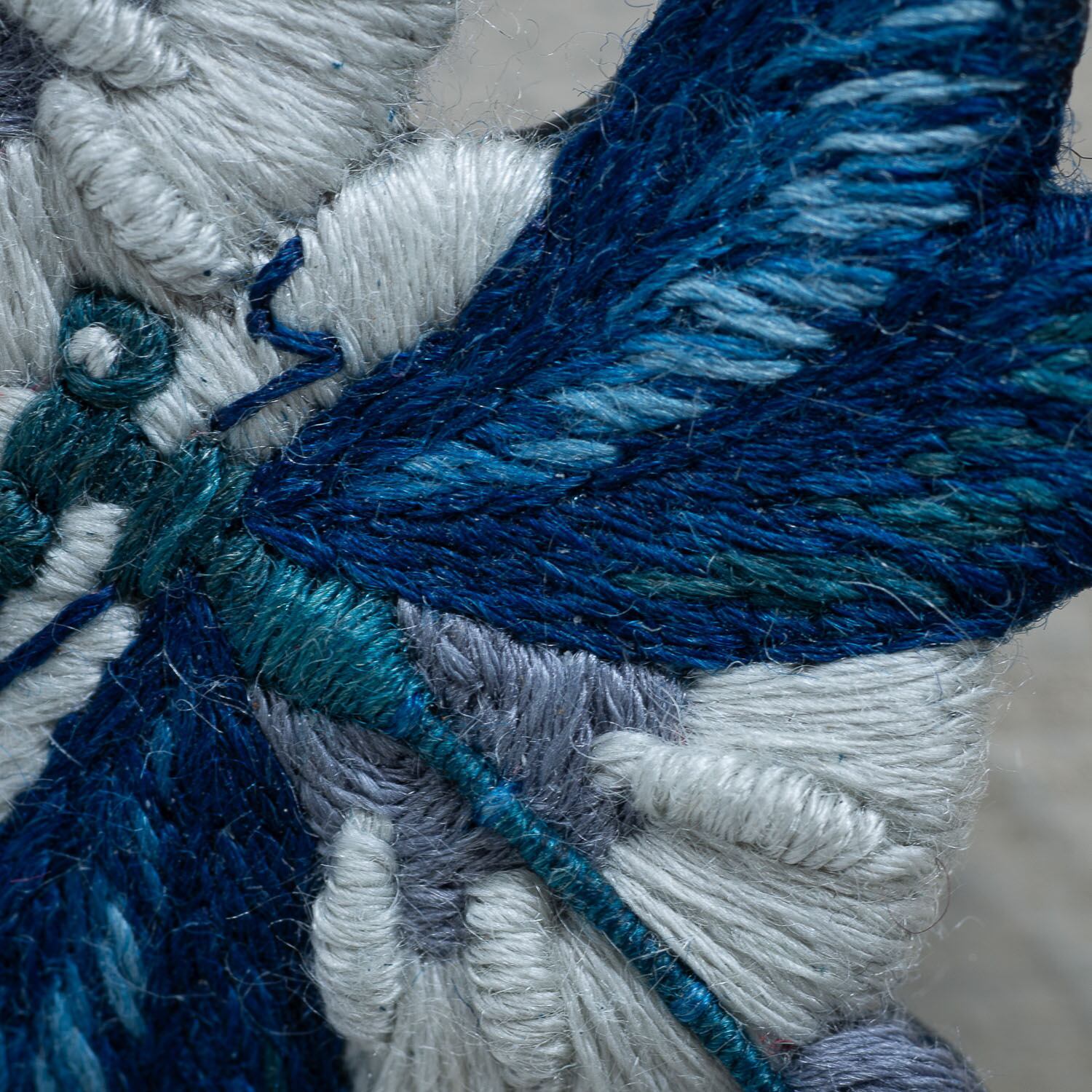
大変繊細なお仕立てです。衣類や金具等との引っかかりや擦れにご注意ください。
水濡れ・色移り
天然染料の特性上、水濡れや汗により色移りする場合がございます。
雨天でのご使用をお控えいただき、淡い色のお召し物と合わせる際はご注意ください。
ワイヤー構造
昆虫の口吻や脚の芯には微細なワイヤーを使用しております。
万が一曲がった場合は、指先で優しくお好みの位置へ整えてください。
金具
ご使用後は柔らかい乾いた布で、汗や皮脂を優しく拭き取ってください。
2. 保管と経年変化
保管
直射日光や強い照明を避け、湿気の少ない暗所にて保管してください。
経年変化
草木染めは時とともに静かに色彩がうつろい、熟成していきます。
生きた素材ならではの味わいとしてお楽しみください。
--- English ---
Materials
Motif: Silk, Genuine Leather
Brooch Fittings: Brass (Antique gold finish)
Dimensions
Motif: Height 53mm × Width 35mm
Brooch Fittings: Length 28mm
-
1. Handling & Use
• Embroidery
Delicately crafted. Please handle with care to avoid snagging or friction.
• Moisture & Color
Natural dyes may transfer when wet or sweaty. Avoid use in the rain and take care with light-colored clothing.
• Wire Structure
Fine wires are embedded inside the proboscis and legs. If bent, gently reshape them with your fingers.
• Hardware
Gently wipe with a soft, dry cloth after use.
2. Storage & Aging
• Storage
Store in a cool, dry, dark place away from direct sunlight or strong lighting.
• Natural Aging
Botanical dyes naturally shift and mature over time. Please enjoy this organic evolution.
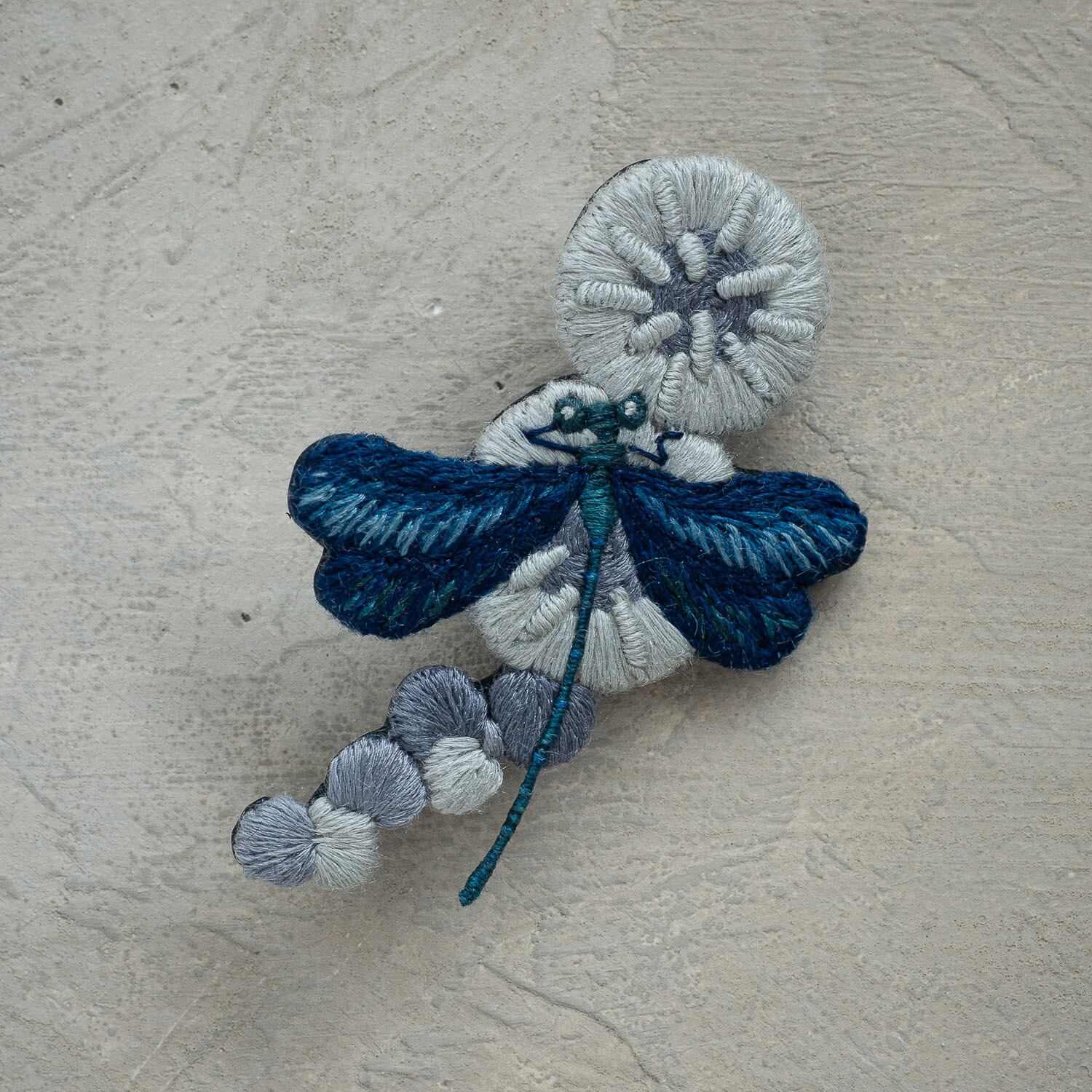
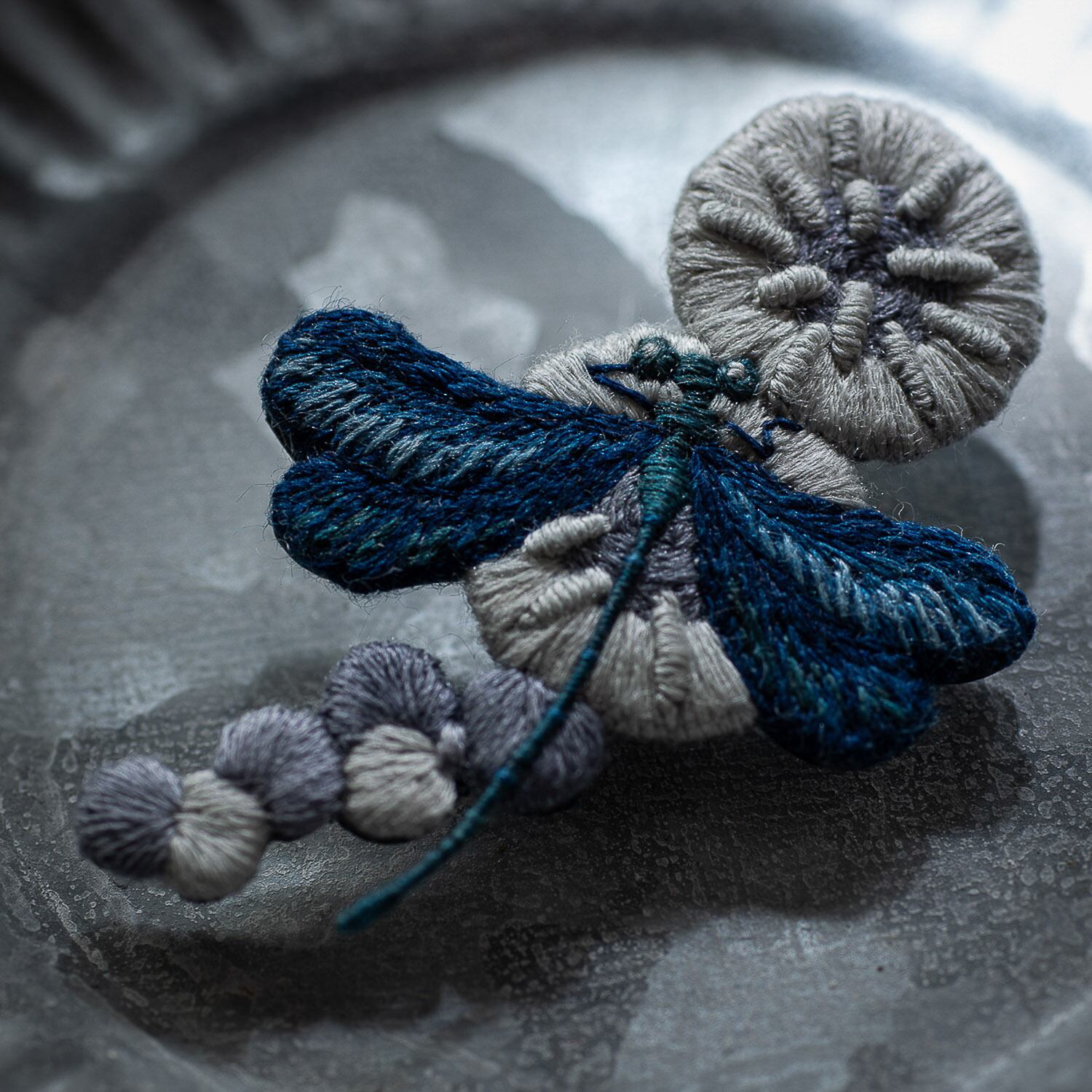
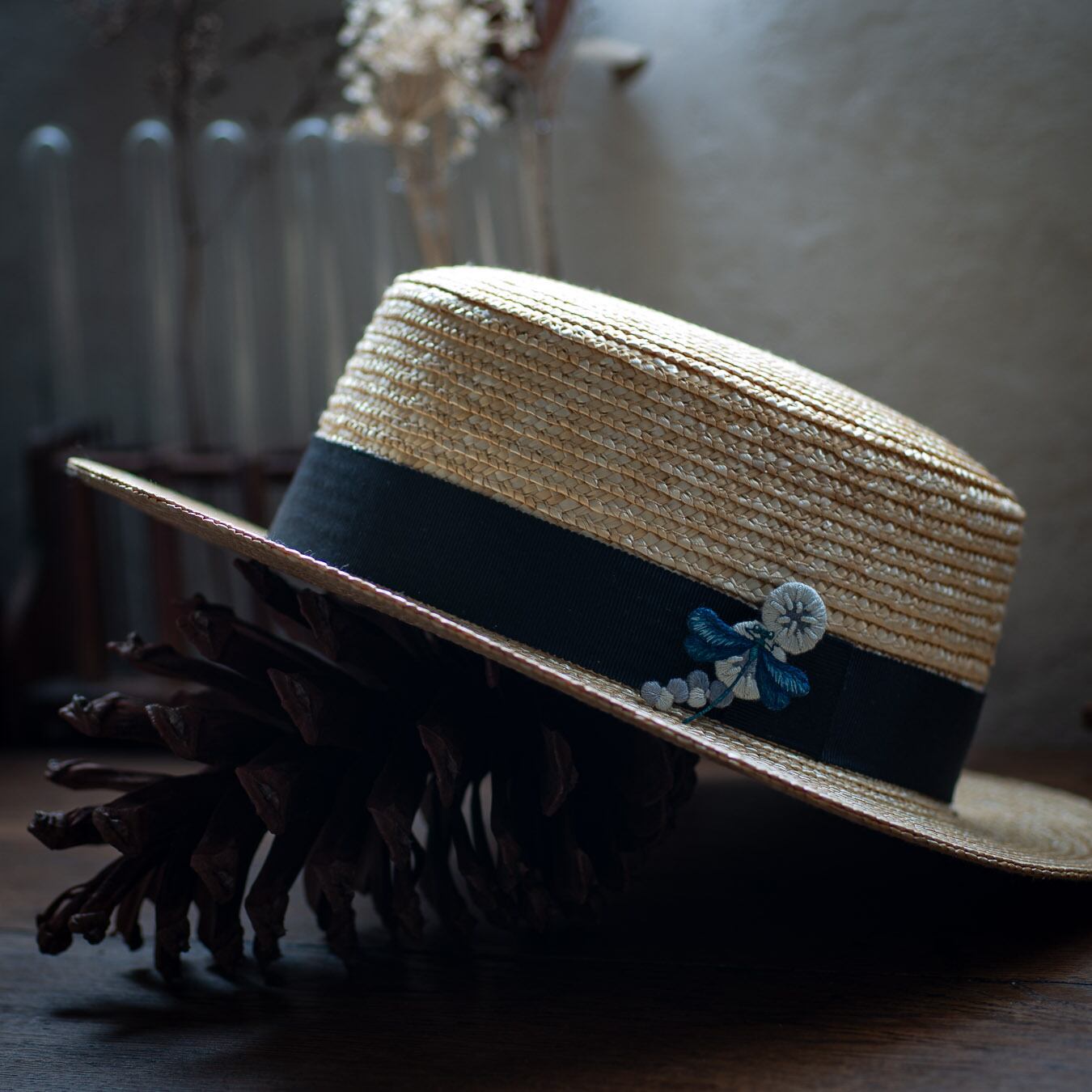


Blue Jewelwing and Bur-reed Brooch
黒い翅が光を受けるとその構造色から青藍色に光り輝く、アオハダトンボ。
翅だけでなく身体も金属光沢の緑〜青緑色という麗しさは、清流に舞う妖精を思わせます。
アオハダトンボは求愛行動が独特で、オスがメスの気を引くために、翅と脚を開いて水面に浮いたまま流れてみせます。フローティングと呼ばれるそのパフォーマンスは、まるで一種のダンスのよう。
哺乳類や鳥類ではよく見られるダンスによる求愛行動ですが、昆虫では珍しいのではないでしょうか。
そんな美しくも個性的なアオハダトンボに合わせたモチーフは、ミクリの花です。
実の形が栗の実に似ていることが名前の由来で、1つの茎の上部に雄花が、下部に雌花が、それぞれ球状の頭状花として集まってつくユニークな水生植物です。
本作ではブローチとしての造形を考慮し、本来とは逆に雌花を上に、雄花を下へと配置して花が連なるように仕立てました。
アオハダトンボとミクリは、ともに豊かな水草と清らかな流れがある場所を好みますが、環境汚染によりどちらも準絶滅危惧種に指定されています。
私たちが当たり前のように眺めていた景色は、実はとても脆く、尊い奇跡のうえに成り立っています。
命の循環に寄り添ったこの作品が、彼らの棲む清らかな流れに思いを馳せるきっかけとなれば幸いです。
---English---
---English---
The Jewelwing (Calopteryx japonica) features black wings that shine in an iridescent indigo-blue when catching the light.
Its elegance—with not only its wings but its entire body gleaming in a metallic green to bluish-green—evokes a fairy dancing over a pristine stream.
The Jewelwing has a unique courtship behavior. To attract a female, the male opens his wings and legs, floating on the water's surface and letting the current carry him. This performance, known as "floating," is much like a dance.
While courtship dances are commonly seen in mammals and birds, they are quite rare among insects.
---English---
The motif paired with this beautiful and unique Jewelwing is the flower of the Mikuri (bur-reed).
Named for its fruit's resemblance to a chestnut, this unique aquatic plant features spherical male flowers clustered at the upper part of the stem, and female flowers at the lower part.
For this piece, considering its design as a brooch, I intentionally reversed the natural order—placing the female flowers above and the male flowers below—to create a beautifully continuous floral arrangement.
Both the Jewelwing and the Mikuri favor habitats with abundant aquatic plants and pristine currents; however, due to environmental pollution, both are now designated as near-threatened species.
The landscapes we have casually gazed upon are, in fact, incredibly fragile and built upon precious miracles.
I sincerely hope this piece, which embraces the cycle of life, will serve as a catalyst for you to turn your thoughts to the pristine streams where they dwell.
Nature of Botanical Dyes
絹糸に使用している染料は、タデアイ、ロッグウッド、カリヤスです。
タデアイ(藍染め)の日光堅牢度は良好。ロッグウッドはミクリに使用しており、紫がかったグレーの部分がグレージュやベージュに変化していきます。変化後の色も素敵なので、育てる過程をどうぞお楽しみください。
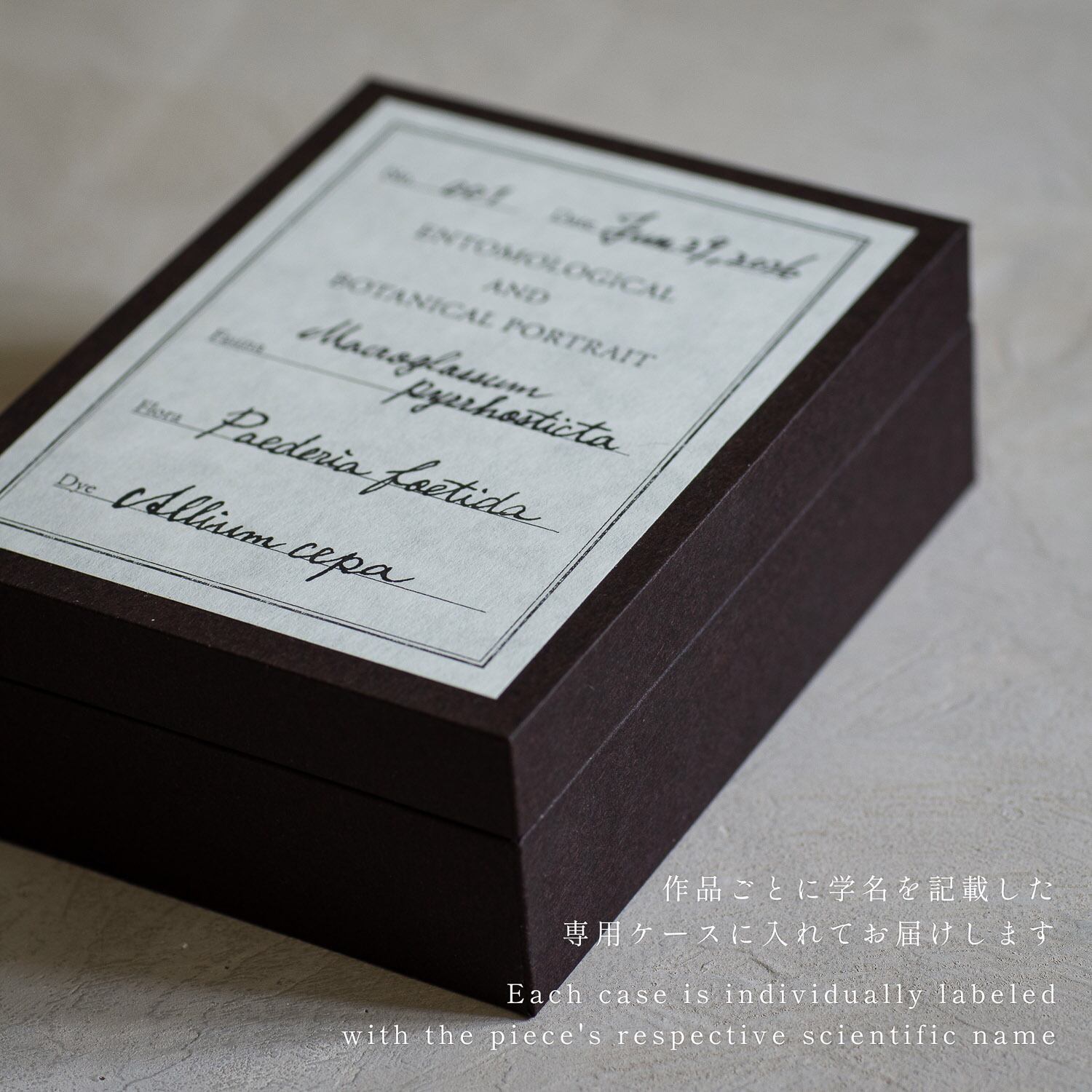
Fauna
Calopteryx japonica
Flora
Sparganium erectum
Dye
Persicaria Haematoxylum campechianum
Alnus firma
Miscanthus tinctorius
---English---
The silk threads are naturally dyed using Japanese indigo, logwood, and Kariyasu grass.
Japanese indigo possesses excellent lightfastness. Logwood, used for the Mikuri (bur-reed) motif, will gradually transition its purplish-gray hues into greige or beige.
The resulting colors are equally beautiful, and we sincerely hope you will enjoy the process of nurturing these evolving hues.
Fauna
Calopteryx japonica
Flora
Sparganium erectum
Dye
Persicaria Haematoxylum campechianum
Alnus firma
Miscanthus tinctorius

アオハダトンボとミクリのブローチ
¥55,000 ($349.05)税込
SOLD OUT
Related Items

ホシホウジャクとヘクソカズラの耳飾り
¥55,000 ($349.05)

アケビコノハとアケビの耳飾り
¥55,000 ($349.05)

ルリセンチコガネと育児球の耳飾り
¥55,000 ($349.05)

 SHARE
SHARE LINE
LINE